MY INNOVATION PLAN
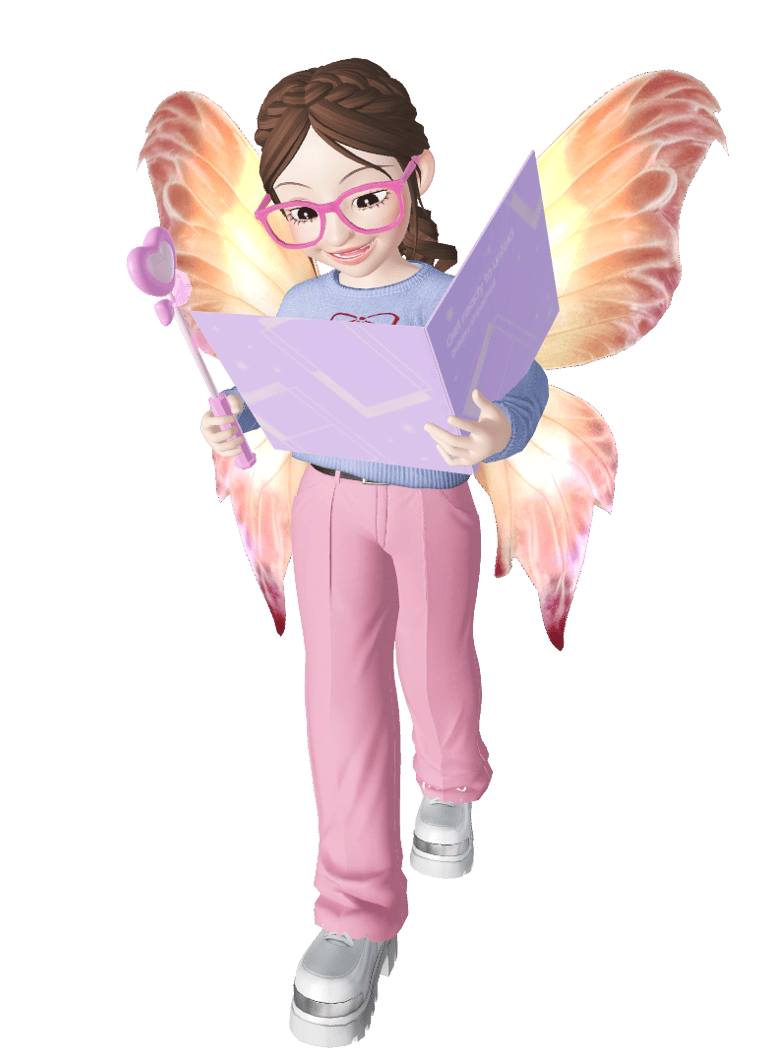
My Innovation Plan, Explorers of the Forest of Reading and Writing, was born from a simple but powerful belief: students learn best when they feel invited to explore, imagine, and create. I envisioned a learning environment that blended physical and digital experiences with intention, allowing bilingual learners to navigate literacy through curiosity and authentic engagement. This forest became a living space where reading and writing grow naturally, supported by hybrid strategies that honor students' voices, strengths, and identities.
Innovation Plan

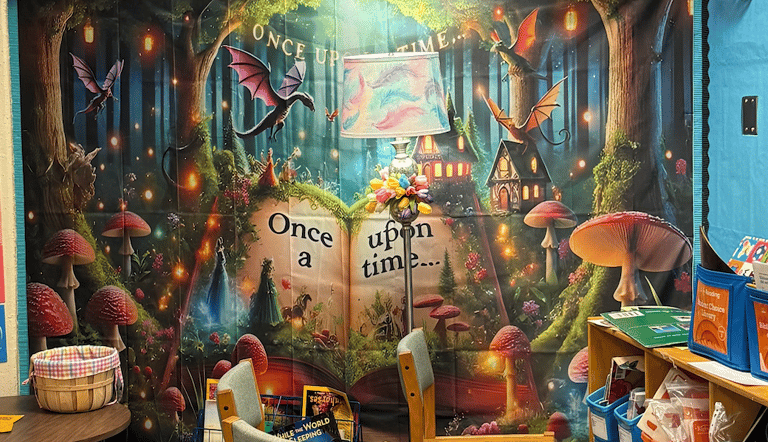
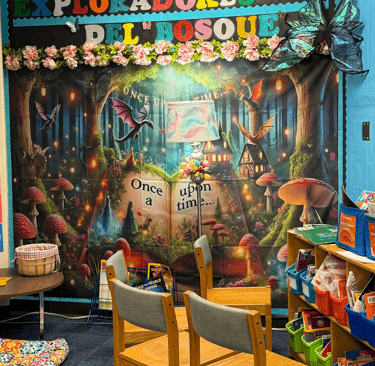
Education is evolving, and hybrid learning is an opportunity to transform teaching by combining the best of the digital and in-person worlds. I invite you to explore our Innovation Plan and share your reflections, experiences, and insights. What challenges and achievements have you encountered in its implementation? Your voice is key to continuous improvement. Together, we drive the future of education!
Evaluation Innovation Plan
Within this context, my Action Research Design Outline focuses on evaluating the effect of the blended learning environment “Explorers of the Forest of Reading and Writing” on the motivation, reading comprehension, and Spanish writing performance of second-grade bilingual students. Inspired by the concept of disruptive innovation (Christensen, Horn & Johnson, 2017), this project leverages narrative, play, and technology not as isolated add-ons, but as drivers that redesign the literacy experience in an inclusive and dynamic environment.


Literature Review

A literature review is an essential step in any research process, as it allows us to recognize previous contributions, identify knowledge gaps, and build a strong foundation to guide pedagogical and methodological decisions (Creswell & Creswell, 2018; Randolph, 2009). In this project, the literature review goes beyond summarizing theories; it becomes a bridge between academic reflection and classroom innovation (Mertler, 2019).
Through this process, research on blended learning, bilingual literacy, motivation, instructional design, and authentic assessment is organized and analyzed. Each author reviewed contributes elements that, once integrated, shape the Explorers of the Forest of Reading and Writing project. Readers will see how theory supports practice and how a pathway is built to address the real challenges of teaching reading and writing in bilingual contexts (Cummins, 2000; García & Kleifgen, 2018).

These documents serve as an invitation to explore a map: a journey that begins with theoretical inquiry, advances through the critical analysis of previous studies, and culminates in the design of an educational innovation model. Reading this literature review means entering the forest of shared knowledge, where each reference opens new possibilities for transforming literacy in schools. Christensen, Horn, and Johnson (2017) demonstrate that disruptive innovation arises when technology is placed at the center of change, while Graham (2019) highlights that blended learning achieves its greatest impact when intentionally aligned with pedagogical goals. Equally important, Brookhart (2013) emphasizes that authentic assessment through rubrics fosters transparency and continuous improvement, and Mertler (2019) underscores that action research depends on triangulating multiple sources of evidence to ensure that innovation is systematically monitored and refined for long-term impact.

Action Research Plan

Action research is a systematic and reflective process that enables educators to investigate their own practice, implement informed changes, and evaluate their impact within authentic learning environments (Mertler, 2019). In this assignment, the focus is on the planning stage, the first phase of the cyclical process that also includes acting, developing, and reflecting.
During this stage, the study defines its topic, purpose, and fundamental research question, and outlines the methods and instruments that will guide data collection and analysis. The following sections outline the key components of my action research plan for the project "Explorers of the Forest of Reading and Writing," which aims to assess its effectiveness in enhancing students’ motivation, reading comprehension, and Spanish writing performance within a bilingual blended learning environment.

Article Innovation Plan
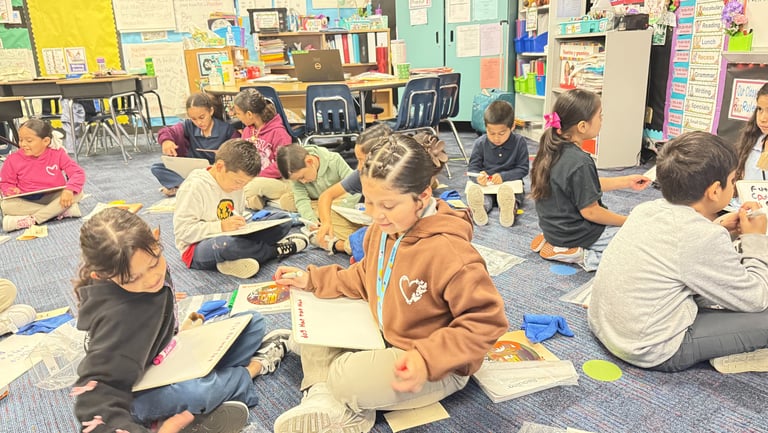
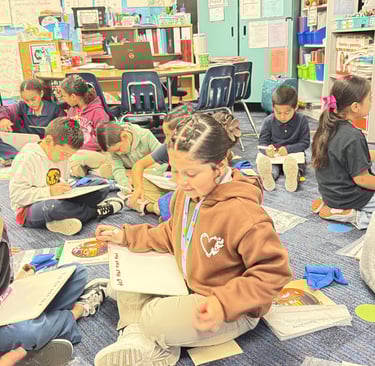
Bilingual literacy in elementary education continues to face significant gaps in motivation and performance. The Explorers of the Forest of Reading and Writing project introduces a blended model that combines station rotation, adaptive platforms, and playful activities to transform reading and writing instruction in bilingual contexts. Grounded in frameworks such as COVA, Universal Design for Learning (UDL), and constructionism, the model integrates digital resources with face-to-face experiences to foster motivation, strengthen reading comprehension, and enhance Spanish writing while building strong foundations for English literacy. This article presents the theoretical foundations, vision, classroom implementation, and lessons learned within a participatory action research process designed to iteratively refine the model and demonstrate its viability and sustainability.


Update Innovation Plan
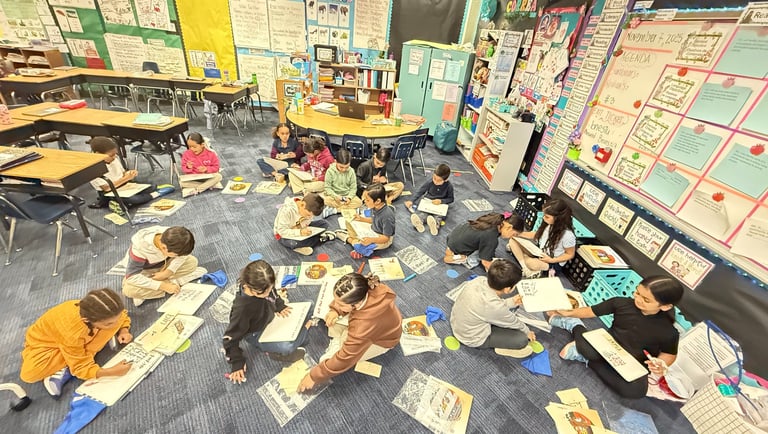
At this point in my process, I recognize that this stage has been a valuable opportunity to improve, strengthen, and deepen my Innovation Plan. Reviewing my journey with greater intention allowed me to see how each piece of the path, including the initial ideas, the reflections, the courses, the conversations, and the classroom experiences, has contributed to giving more clarity, structure, and meaning to my project, Explorers of the Forest of Reading and Writing. This more intentional perspective not only reaffirms what I have built but also opens new possibilities for continuing to advance and enrich it with purpose. My Innovation Plan, Explorers of the Forest of Reading and Writing, marked the beginning of this journey. I envisioned it as a hybrid, creative, and bilingual space where my students could explore reading and writing with curiosity and intention. Over time, this forest grew into a more robust and intentional environment, one increasingly aligned with the real needs of my students. It has been inspiring to see how this initial idea continues to grow and evolve as I move forward in my practice.


References
Andrade, H., & Brookhart, S. M. (2020). Student self-assessment: Assessment to empower students and transform teaching. Routledge. https://doi.org/10.4324/9780429295628
August, D., & Shanahan, T. (2006). Developing literacy in second-language learners: Report of the National Literacy Panel on Language-Minority Children and Youth. Lawrence Erlbaum.
August, D., & Shanahan, T. (2017). Developing literacy in second-language learners. Routledge.
Barrett, H. C. (2007). Researching electronic portfolios and learner engagement: The REFLECT initiative. Journal of Adolescent & Adult Literacy, 50(6), 436–449. https://doi.org/10.1598/JAAL.50.6.2
Bialystok, E. (2001). Bilingualism in development: Language, literacy, and cognition. Cambridge University Press. https://doi.org/10.1017/CBO9780511605963
Brookhart, S. M. (2013). How to create and use rubrics for formative assessment and grading. ASCD.
CAST. (2018). Universal Design for Learning guidelines version 2.2. CAST. http://udlguidelines.cast.org
Christensen, C. M., Horn, M. B., & Johnson, C. W. (2017). Disrupting class: How disruptive innovation will change the way the world learns. McGraw-Hill.
Covey, C., McChesney, C., & Huling, J. (2012). The 4 disciplines of execution: Achieving your wildly important goals. Free Press.
Creswell, J. W., & Creswell, J. D. (2018). Research design: Qualitative, quantitative, and mixed methods approaches (5th ed.). SAGE Publications.
Cummins, J. (2000). Language, power and pedagogy: Bilingual children in the crossfire. Multilingual Matters. https://doi.org/10.21832/9781853596773
Darling-Hammond, L., Flook, L., Cook-Harvey, C., Barron, B., & Osher, D. (2020). Implications for educational practice of the science of learning and development. Applied Developmental Science, 24(2), 97–140. https://doi.org/10.1080/10888691.2018.1537791
Dweck, C. S. (2006). Mindset: The new psychology of success. Random House.
Fink, L. D. (2013). Creating significant learning experiences: An integrated approach to designing college courses (2nd ed.). Jossey-Bass.
Fisher, D., Frey, N., & Hattie, J. (2016). Visible learning for literacy, grades K-12: Implementing the practices that work best to accelerate student learning. Corwin Literacy.
García, O. (2009). Bilingual education in the 21st century: A global perspective. Wiley-Blackwell.
García, O., & Kleifgen, J. A. (2018). Educating emergent bilinguals: Policies, programs, and practices for English learners (2nd ed.). Teachers College Press.
Genesee, F., Geva, E., Dressler, C., & Kamil, M. (2006). Synthesis: Cross-linguistic relationships. In D. August & T. Shanahan (Eds.), Developing literacy in second-language learners (pp. 153–174). Lawrence Erlbaum.
Graham, C. R. (2019). Current research in blended learning: Integration, disruption, and acceleration. Computers & Education, 144, 103701. https://doi.org/10.1016/j.compedu.2019.103701
Guthrie, J. T., & Wigfield, A. (2000). Engagement and motivation in reading. In M. L. Kamil, P. B. Mosenthal, P. D. Pearson, & R. Barr (Eds.), Handbook of reading research (Vol. 3, pp. 403–422). Lawrence Erlbaum.
Harapnuik, D. (2016). COVA+CSLE: Choice, ownership, voice, and authentic learning in creating significant learning environments. https://www.harapnuik.org
Koda, K. (2007). Reading and language learning: Crosslinguistic constraints on second language reading development. Language Learning, 57(1), 1–44. https://doi.org/10.1111/0023-8333.101997010-i1
Marzano, R. J. (2009). Formative assessment & standards-based grading. Marzano Research Laboratory.
Means, B., Toyama, Y., Murphy, R., Bakia, M., & Jones, K. (2010). Evaluation of evidence-based practices in online learning: A meta-analysis and review of online learning studies. U.S. Department of Education.
Mertler, C. A. (2019). Action research: Improving schools and empowering educators (6th ed.). SAGE Publications.
Pekrun, R. (2006). The control-value theory of achievement emotions: Assumptions, corollaries, and implications for educational research and practice. Educational Psychology Review, 18(4), 315–341. https://doi.org/10.1007/s10648-006-9029-9
Roblyer, M. D., & Hughes, J. E. (2019). Integrating educational technology into teaching (8th ed.). Pearson.
Selwyn, N. (2016). Education and technology: Key issues and debates (2nd ed.). Bloomsbury Academic.
Thomas, D., & Brown, J. S. (2011). A new culture of learning: Cultivating the imagination for a world of constant change. CreateSpace.
Wang, A. I., & Tahir, R. (2020). The effect of using Kahoot! for learning: A literature review. Computers & Education, 149, 103818. https://doi.org/10.1016/j.compedu.2020.103818
Warschauer, M., & Matuchniak, T. (2010). New technology and digital worlds: Analyzing evidence of equity in access, use, and outcomes. Review of Research in Education, 34(1), 179–225. https://doi.org/10.3102/0091732X09349791
Wenger, E. (1998). Communities of practice: Learning, meaning, and identity. Cambridge University Press.
Wiggins, G., & McTighe, J. (2005). Understanding by design (2nd ed.). ASCD.