COVA/CSLE REFLECTION
Learning That Belongs to Them: Designing Human Centered Experiences Through COVA and CSLEs
The truth is that teaching today requires much more than designing activities or incorporating technology into the classroom; it requires creating learning experiences that genuinely connect with people. Along this journey, two conceptual frameworks have reshaped my understanding of how students learn: CSLE (Creating Significant Learning Environments), proposed by Fink (2013), and COVA (Choice, Ownership, Voice & Authentic Learning), developed by Harapnuik, Thibodeaux, and Cummings (2018). Both models converge on a fundamental principle: deep learning occurs when students find meaning, purpose, and agency in what they do, and when the environment is intentionally designed to support that process.
From the CSLE perspective, Fink (2013) argues that the most powerful learning environments integrate emotion, relevance, interaction, and intellectual challenge. It is not only about “teaching content,” but about building contexts where students can explore, connect, apply, and reflect in authentic ways. Complementing this, the COVA model empowers learners to take an active role through meaningful choice, ownership of their learning, the expression of their voice, and the creation of authentic artifacts that connect to their lives and identities (Harapnuik et al., 2018). Together, these frameworks do more than guide instructional design; they transform the culture of learning, fostering communities that are more autonomous, reflective, and creative.
Understanding how COVA and CSLE work together offers a powerful lens for rethinking what learning can look like, one that invites teachers, leaders, and school communities to approach education in a more human, intentional, and connected way. Exploring these models becomes, en realidad, an invitation to a kind of learning that leaves a lasting imprint: learning where technology is used with purpose, where student voice becomes a catalyst for growth, and where every experience is crafted to be meaningful, authentic, and memorable.
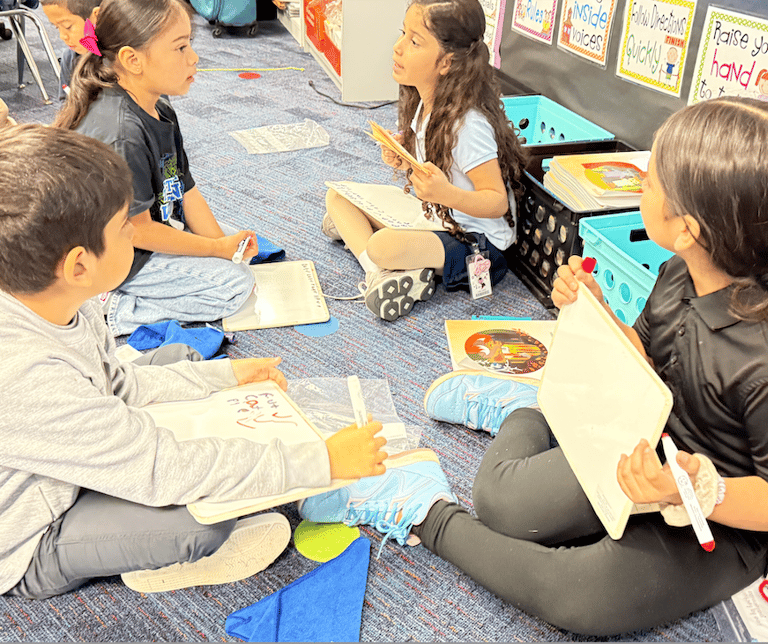
A New Culture of Learning in Hybrid Classrooms: Transforming Education Through Passion, Play, Imagination, and Community.
Designing meaningful learning experiences requires more than good intentions; it calls for planning, contextual awareness, and a clear pedagogical purpose. This assignment represents a key step in advancing my innovation plan by aligning learning outcomes, authentic assessments, and instructional activities through the lens of Significant Learning (Fink, 2003).


COVA: A Philosophy That Transforms Learning Through Authenticity


Embracing the COVA approach Choice, Ownership, Voice, and Authentic Learning has been more than applying a strategy; it has reshaped how I understand myself as an educator. Throughout the ADL journey, I rediscovered my voice, strengthened my agency, and began designing learning with deeper intention and authenticity.
Exploring COVA and CSLE reminds us that meaningful learning is not a finished product; it is a living, evolving process shaped by the choices we make, the environments we design, and the voices we empower. When we create spaces where students feel seen, heard, and genuinely engaged, learning becomes more than a requirement. It becomes a journey of identity, curiosity, and purpose. The same happens to us as educators. Every step toward more authentic, human-centered design strengthens our practice and connects us more deeply to what truly matters.
This is the invitation: keep learning, keep experimenting, and keep exploring new ways to build significant learning environments. Allow yourself to be surprised by ideas, models, and connections that blend purposeful technology with the human essence of learning. And as we continue to expand agency through COVA (Harapnuik, Thibodeaux, & Cummings, 2018) and refine our environments with CSLE (Fink, 2013), we build communities where learning leaves a lasting imprint. Let us walk this path with curiosity, courage, and hope, knowing that even the smallest shifts can inspire meaningful transformation in the lives of our students.

REFERENCES
Fink, L. D. (2003). Creating significant learning experiences: An integrated approach to designing college courses. Jossey-Bass.
Harapnuik, D. (2021). CSLE + COVA: Creating Significant Learning Environments to give learners Choice, Ownership, and Voice through Authentic learning opportunities. Retrieved from https://www.harapnuik.org/?page_id=7547
International Society for Technology in Education. (2017). ISTE Standards for Educators. https://www.iste.org/standards/iste-standards-for-teachers
McTighe, J., & Seif, E. (2011). An implementation framework to support 21st century skills. In J. Bellanca & R. Brandt (Eds.), 21st Century Skills: Rethinking How Students Learn (pp. 155–176). Solution Tree Press.
Thomas, D., & Seely Brown, J. (2011). A new culture of learning: Cultivating the imagination for a world of constant change. CreateSpace.
Wiggins, G., & McTighe, J. (2005). Understanding by design (Expanded 2nd ed.). ASCD.